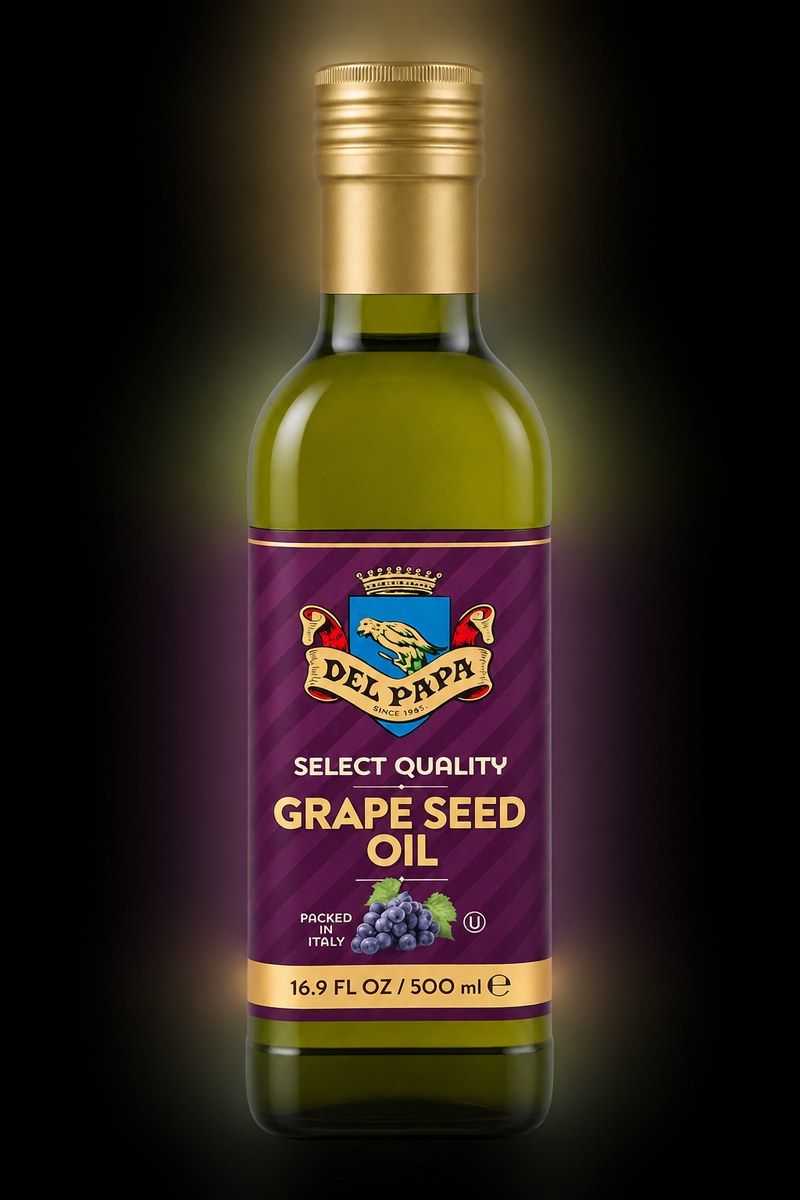
Mayonnaise made with a strong extra virgin is a fine thing, but it is a different sauce: green, bitter, assertive. The classic one, the one that disappears behind a crab salad or a cold roast, wants an oil with no opinion. Grape seed oil is the chef's choice for exactly this: clean, light, and stable in an emulsion.
The method below is the old one, by hand. A stick blender works too and never fails; the whisk simply tastes better, because you stop when it is right rather than when it is done.
Ingredients
- Egg yolk, room temperature1
- Dijon mustard1 tsp
- White wine vinegar or lemon juice2 tsp
- Del Papa Extra Light Taste Grape Seed Oil200 ml
- Fine salta pinch
- White pepperoptional
Method
- Set a bowl on a damp cloth so it stays put. Whisk the yolk with the mustard, half the vinegar and the salt until it thickens slightly.
- Add the oil a few drops at a time, whisking constantly, until the mixture visibly thickens and holds the trail of the whisk. This first minute is the only one that matters.
- Now pour the oil in a thin, steady stream, still whisking, until it is all in and the mayonnaise is glossy and firm.
- Finish with the rest of the vinegar, taste for salt and pepper, and loosen with a teaspoon of warm water if you want it to pour.
Good to know
- If it splits, start again with a fresh yolk and add the broken sauce to it drop by drop: it will come back.
- Swap a quarter of the grape seed oil for Organic extra virgin and you have a dressing for boiled vegetables and poached fish.
- A spoon of Gourmet Lemon at the end turns it into a sauce for fried fish.
Grape seed oil has almost no taste of its own and a smoke point around 216 °C, which is why it sits next to the extra virgin in every professional kitchen. It is the oil you reach for when the ingredient should lead.