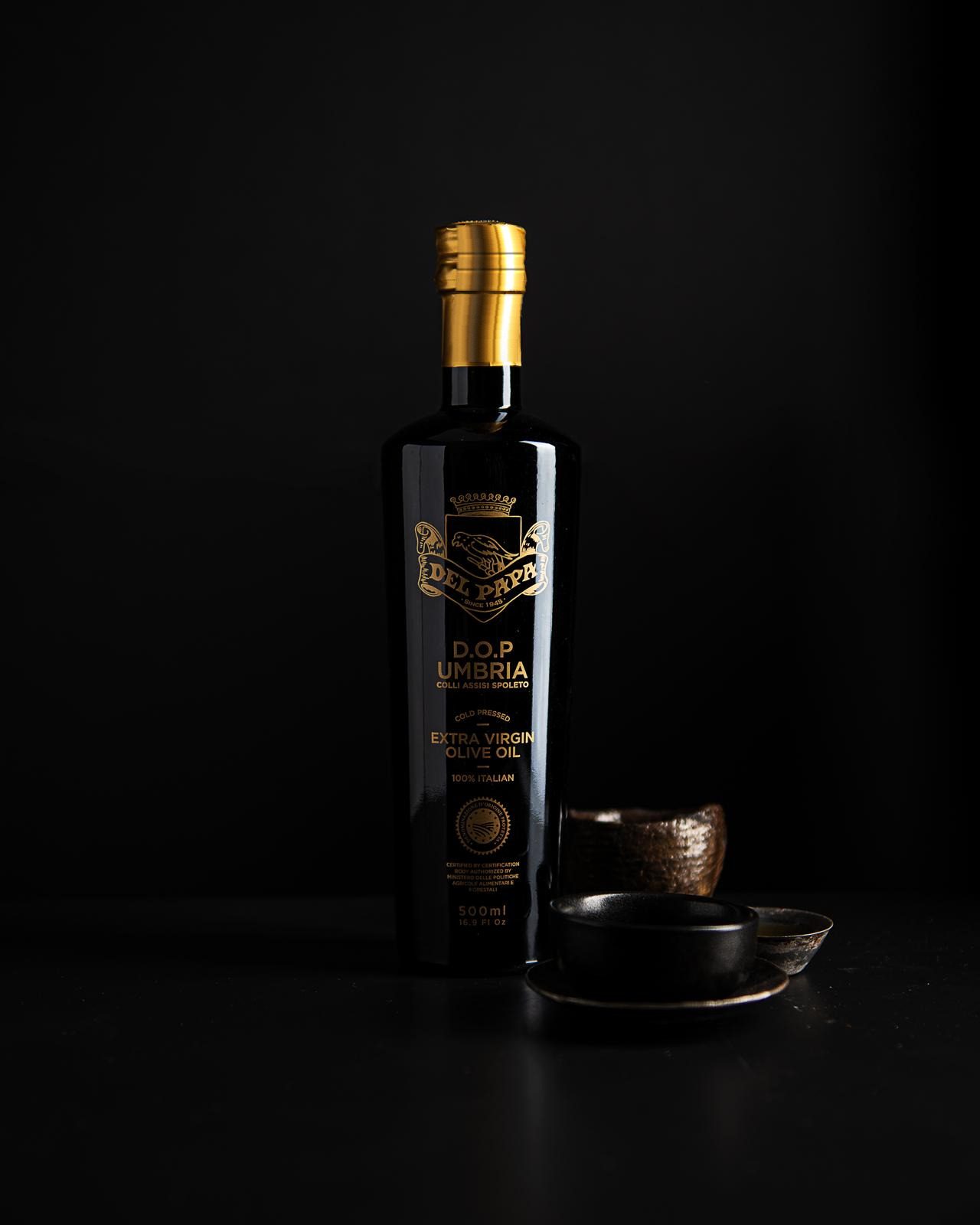
Every Italian kitchen we know keeps at least two oils: one to taste and one to cook. The reason is not snobbery but chemistry. An oil's aroma is volatile and its smoke point is fixed, so the bottle that makes a bruschetta sing is wasted in a fryer, and the one that fries cleanly has nothing to say on a salad. Here is where each of ours belongs.
Raw, on the plate: Special Event and Organic
The two extra virgins with the most character. Bruschetta, legumes, soups, grilled fish and meat, raw vegetables: anywhere the oil is added at the end and tasted as itself. Bold and pungent (Special Event) or full and fruity (Organic); both lose their point above 60 °C.
Everyday cooking and the oven: Avocado Oil
A mild, refined oil obtained from the flesh of the avocado, for everyday cooking and roasted vegetables. It stays in the background and lets the ingredients lead, and it is just as quiet in a marinade or a dressing.
Gentle heat and baking: Mild Taste Pure
Refined and virgin olive oils blended for a round, quiet profile. Cakes, breads and doughs that need a fat without a voice; dishes for children; long, gentle cooking where an extra virgin would turn bitter.
High heat: Light Taste Pomace and Grape Seed
Frying, searing, wok cooking. Both are stable well above 200 °C and neutral on the palate. The pomace oil keeps a faint olive note and is the choice of professional kitchens by the gallon; the grape seed oil, with a smoke point near 216 °C, is the invisible one, for emulsions and anything where the ingredient must lead.
And the eight Gourmet
Never cooked. A spoon at the end, on a finished plate: lemon on fish, truffle on eggs and rice, garlic and chili on pizza and pasta, rosemary on potatoes and lamb, basil on tomatoes, porcini on polenta. One bottle replaces a shelf of jars.
The finder at the top of the collection page asks one question, "what are you cooking?", and points to the bottle. This guide is the long answer.