An olive oil label is a legal document before it is a piece of design. Every claim on it is regulated, which means that once you know the vocabulary you can read a bottle in the shop the way we read a lot in the laboratory. Here is the vocabulary, from the top of the label down.
"Extra virgin"
The highest grade of olive oil. It must be obtained from the fruit by mechanical means only, with no heat or solvents, and pass both a chemical test (free acidity below 0.8%, among other limits) and a sensory test by a trained panel, with zero defects. "Virgin" has the same method and looser limits; "olive oil" is a blend of refined and virgin oils; "pomace oil" starts from the residue of the first pressing. Four categories, four different jobs in the kitchen.
"Cold pressed" and "cold extracted"
Both mean the paste was kept below 27 °C during extraction, which protects aroma and polyphenols. "Pressed" refers to the old hydraulic presses; "extracted" to the modern centrifuge most mills, including ours, use today. The result is the same claim, verified the same way.
The origin
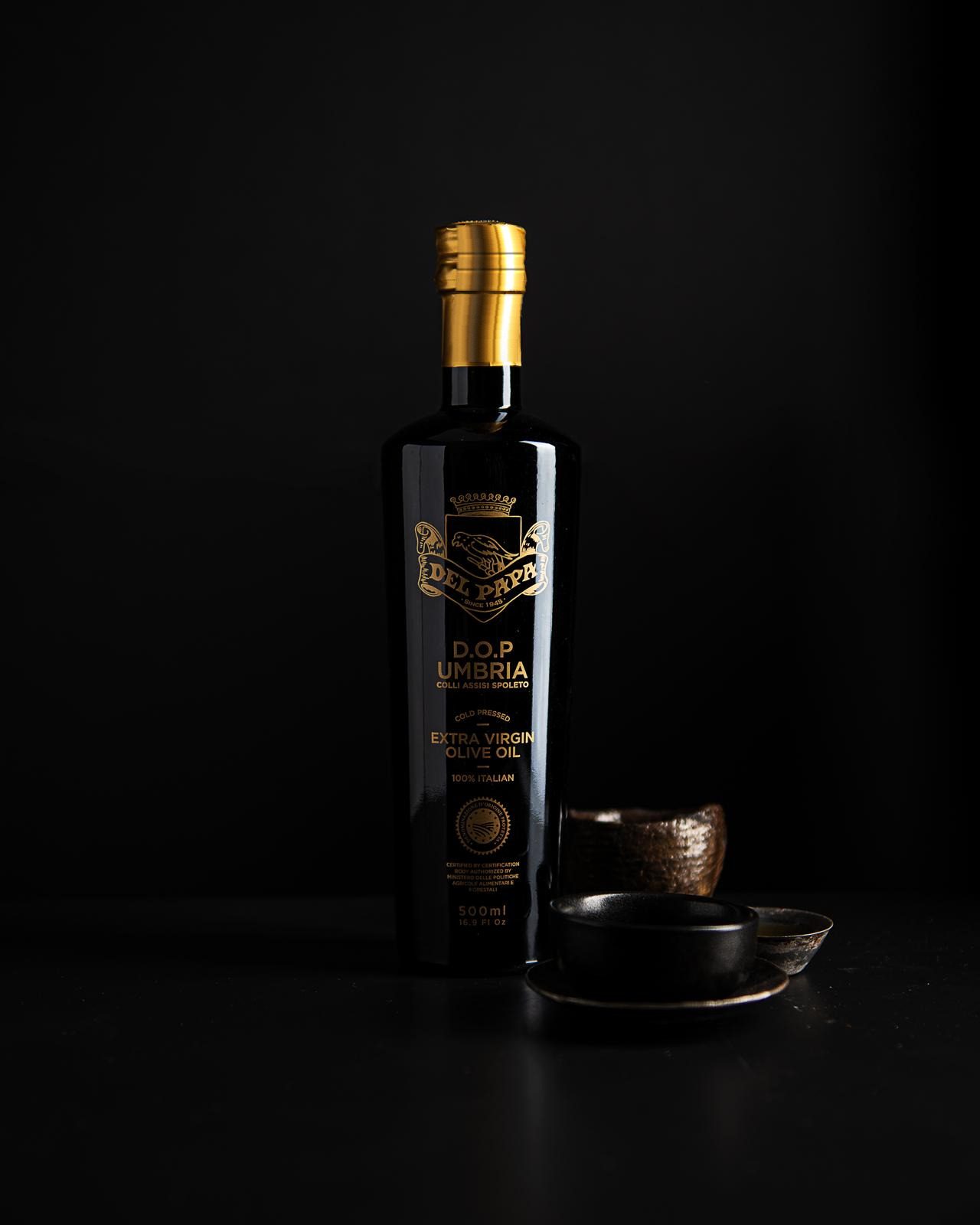
"Product of Italy" means the olives were grown and pressed in Italy. "EU" or "non-EU" blends say exactly that. A protected designation such as D.O.P. Umbria goes further: the olives, the mill and the bottling all sit inside a defined territory, under a production specification checked by an authorised certification body. The yellow-and-red EU seal is the quick way to spot it.
Harvest and best-before
Extra virgin is a fresh product: it peaks in the months after the harvest and slowly loses aroma over about eighteen months. A harvest date (ours reads, for example, "harvest 2026") tells you more than a best-before date, which is set by the bottler. If you see both, trust the harvest.
Certifications
Organic (the EU leaf, ICEA or another body in Italy, USDA in the United States) certifies the farming; Kosher certifies the process; D.O.P. certifies the territory. None of them certifies taste. For that there is only one test, which you perform with a glass and a spoon.
What is not on the label
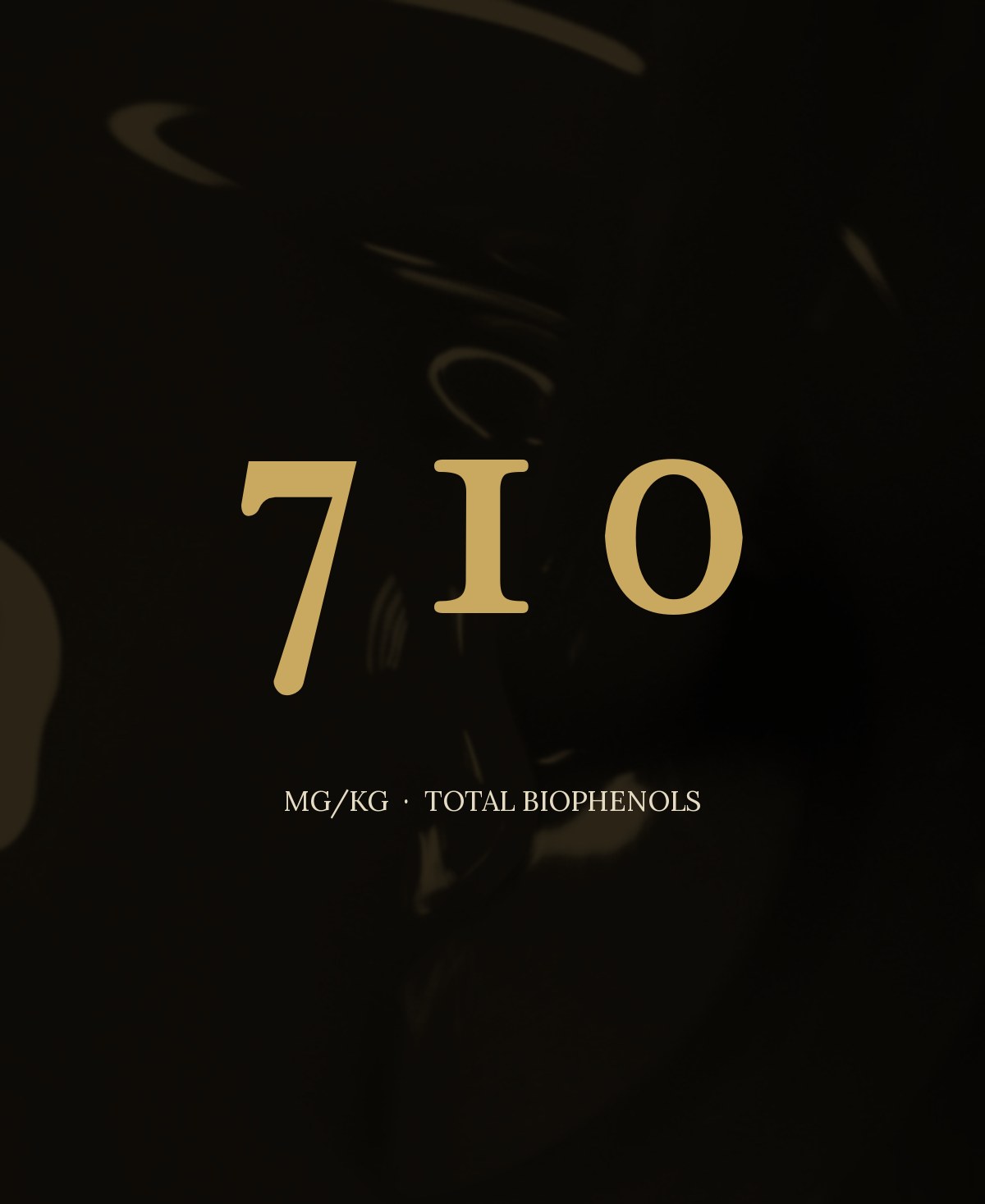
Polyphenol content, peroxide value, K232 and K268 absorbances: the numbers that actually describe freshness and quality are not required on the label. We publish ours, lot by lot, on the laboratory page. Ask any producer for theirs; the good ones will have them.
A bottle that says a great deal is not necessarily a great bottle. The quietest label in our range, the black D.O.P. Umbria, carries the strictest set of rules.