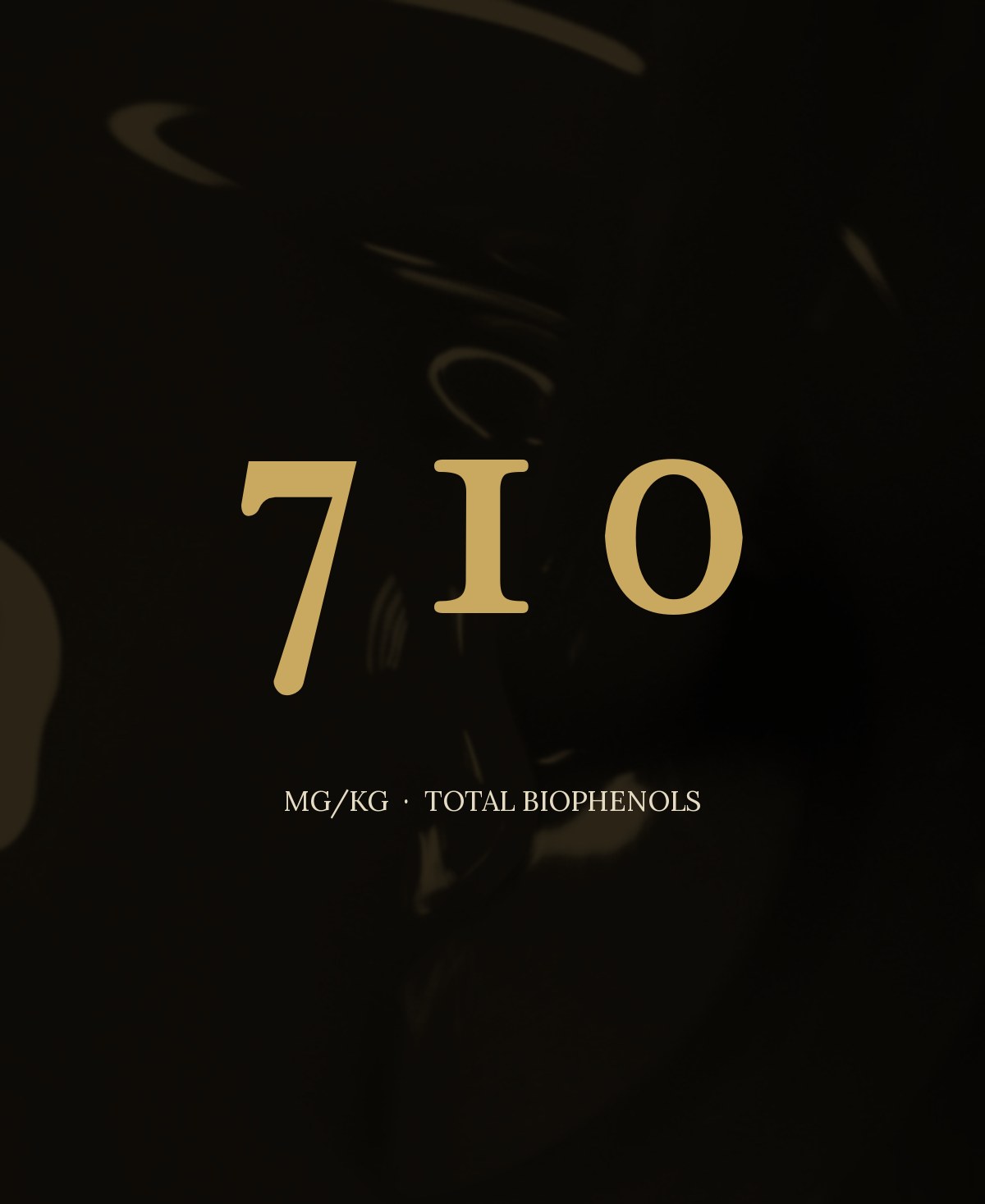
When the October 2026 lot of our Organic extra virgin came back from analysis, the line we read first was total biophenols: 710 mg/kg. It is a number we are proud of, and also one that deserves an explanation, because polyphenols are talked about a great deal and understood rather less.
What they are
Polyphenols are natural antioxidant compounds the olive tree produces to protect its fruit. In the oil they survive only if the olives are picked early and healthy, pressed within hours, kept cold, and bottled without delay. They are, in other words, a measure of how carefully the oil was made. They are also what you taste: the bitterness on the tongue and the peppery catch in the throat are polyphenols, oleocanthal above all.
The health claim
European regulation 432/2012 allows one specific claim: olive oil polyphenols contribute to the protection of blood lipids from oxidative stress. The claim may be used only when the oil contains at least 250 mg/kg of hydroxytyrosol and its derivatives, and the benefit is stated for a daily intake of 20 g of oil, about two tablespoons. Our October lot measured 710 mg/kg of total biophenols, nearly three times the threshold.
Why it drops
Polyphenols decline with time, light and heat, which is why a harvest date matters more than a best-before and why we publish values measured at bottling. An oil that started at 710 will still be well above 250 a year later if it is kept properly; an oil that started at 200 never qualified.
How to taste for them
Pour a spoonful, warm the glass in your hands, sip with air, and wait. A clean bitterness, then a pepper that builds and may make you cough once: that is a high-polyphenol oil, and the cough is an old compliment among tasters. A soft, buttery, sweet oil can be pleasant and perfectly good; it is simply carrying less.
The full report, with K232, K268, ΔK, vitamin E, mineral oil hydrocarbons and a 561-compound pesticide screen, is on the laboratory page. We would rather you read it than take our word.